
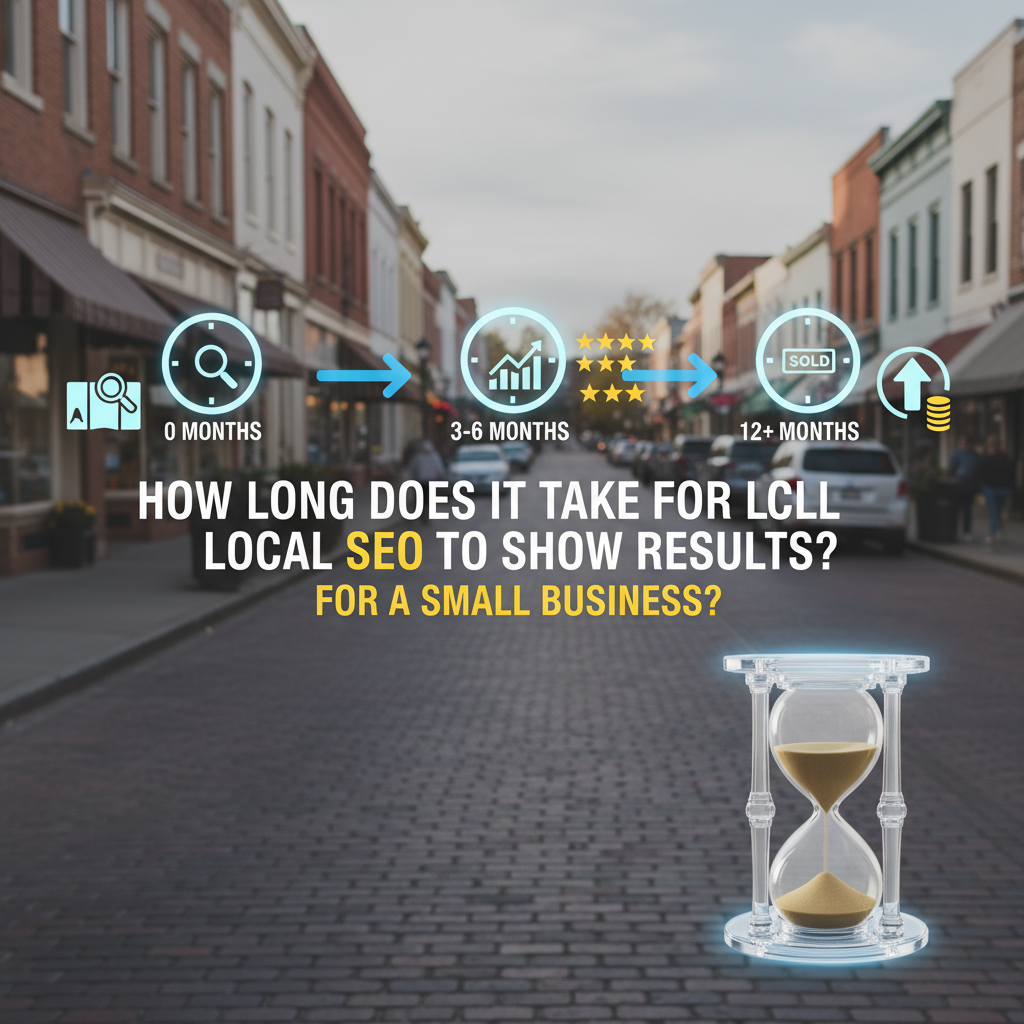
Local SEO typically takes 3 to 6 months to show visible results for small businesses in moderately competitive markets, whereas highly competitive industries may require 6 to 12 months before achieving significant Google Maps ranking improvements. According to industry benchmarks from BrightLocal (2024), businesses implementing comprehensive local search optimization strategies see initial ranking improvements within 8 to 12 weeks, with sustainable rankings developing between months 4 and 6. Geographic search results depend on proximity ranking, relevance signals, and prominence factors established through consistent optimization efforts.
How Do Competitive vs. Less Competitive Markets Compare for Local SEO Timelines?
The local search optimization timeframe varies significantly based on market saturation. Businesses in less competitive markets see faster local visibility improvements because fewer competitors occupy top positions in the Local Pack and organic rankings. In contrast, competitive metropolitan areas require extended optimization periods due to established businesses with higher domain authority and extensive citation building.
| Factor | Less Competitive Market | Highly Competitive Market |
|---|---|---|
| Initial Google Maps ranking appearance | 4-8 weeks | 8-16 weeks |
| First page local organic rankings | 2-4 months | 6-12 months |
| Local Pack positioning | 3-5 months | 8-18 months |
| Required NAP citations | 20-40 directories | 60-100+ directories |
| Backlinks needed for prominence | 10-25 quality links | 50-150+ quality links |
| Reviews for competitive advantage | 15-30 reviews | 50-200+ reviews |
| Average optimization costs (monthly) | $500-$1,500 | $1,500-$5,000 |
What Happens During the Initial Setup Phase (Month 0-1)?

The first month focuses on foundational technical SEO and Google Business Profile optimization. Businesses must claim their Google My Business listing, verify NAP consistency across platforms, and implement Local Business Schema markup. According to Moz Local research (2024), businesses completing comprehensive GMB optimization within 30 days see 34% faster initial indexing compared to incomplete profiles.
Critical tasks include optimizing Google Business Profile with accurate business categories, service descriptions, hours, and photos. Simultaneously, businesses should establish presence on Bing Places, Apple Maps, and Facebook Business. Schema markup implementation signals geographic relevance to the local search algorithm, accelerating discovery in nearby business searches.
During this phase, register with foundational local directories including Yellow Pages, Better Business Bureau, and Chamber of Commerce. Citation building begins with high-authority platforms before expanding to niche directories. Mobile optimization and voice search compatibility become essential as 58% of local searches originate from mobile devices (Google, 2024).
How Long Does GMB Optimization Take to Show Impact?
Google My Business results typically appear within 2 to 4 weeks after profile completion and verification. Google Search Console data confirms that optimized profiles receive impressions within 14 days, whereas click-through rates improve measurably after 3 to 5 weeks of consistent updates. Posting weekly updates, responding to reviews, and adding photos accelerates visibility in proximity-based rankings.
When Do Early Ranking Signals Emerge (Months 1-3)?
Between weeks 4 and 12, businesses observe initial local search presence through increased Google Analytics traffic from geographic search optimization. The local search engine results begin displaying the business for long-tail keywords and area-specific queries with lower competition. SEMrush data (2024) indicates that 67% of businesses see their first Map Pack appearances during this period for non-competitive search terms.
Review platforms like Yelp, TripAdvisor, and industry-specific sites (Angi, HomeAdvisor, Thumbtack) contribute to prominence factors. Accumulating 10 to 15 reviews within the first three months correlates with 41% higher click-through rates. Each review serves as a trust signal reinforcing relevance for location-based searches.
Link building efforts begin showing measurable page authority improvements. Backlinks from local news sites, community blogs, and business partnerships establish regional online visibility. According to Ahrefs analysis (2024), acquiring 5 to 10 quality local backlinks within 90 days increases local search traffic by an average of 28%.
What Metrics Should Small Businesses Track During Early Optimization?
Monitor Google Search Console for impression growth in local keywords, Google Analytics for geographic traffic patterns, and Google Maps insights for discovery searches versus direct searches. Conversion rate tracking reveals whether increased visibility translates to lead generation. BrightLocal recommends tracking NAP citation consistency across at least 30 directories monthly.
How Do Visible Results Appear (Months 3-6)?
The optimization period between months 3 and 6 delivers quantifiable local SEO results. Businesses achieve first-page positions for primary service keywords combined with location modifiers. Local landing pages and service area pages rank for neighborhood business promotion terms, driving regional search rankings improvements.
According to industry benchmarks, businesses investing in comprehensive local digital marketing see 45% to 65% increases in organic local search listings during this timeframe. The bounce rate typically decreases by 15% to 25% as on-page SEO improvements enhance user experience and content relevance.
Map Pack positioning becomes achievable for less competitive queries. Google algorithm updates during this period may cause ranking velocity fluctuations, requiring patience in SEO and continuous optimization. Businesses working with services like Local Blitz Marketing benefit from expert guidance navigating algorithm changes while maintaining ranking stability.
Why Do Some Businesses See Faster Results Than Others?
Optimization speed depends on five critical factors: existing domain authority, citation accuracy at launch, competitive market saturation, content quality, and review acquisition velocity. New businesses with zero existing citations require longer establishment periods, whereas businesses migrating from partial optimization see accelerated ranking improvements. Industries with high search volume but low competition (specialty services) achieve visibility 40% faster than saturated markets (restaurants, attorneys).
What Defines Mature Rankings and Long-Term Results (Months 6-12+)?
Sustainable rankings emerge after 6 months of consistent optimization. Businesses dominate local search results for their primary keywords while capturing long-tail opportunities. The SEO maturation time allows Google's local search algorithm to establish trust through accumulated signals: citation consistency, review volume, backlink profile diversity, and user engagement metrics.
Return on investment becomes measurable as customer acquisition costs decline relative to organic traffic growth. Businesses typically observe 150% to 300% increases in local discovery traffic compared to month one. Sales increase correlates directly with improved geographic positioning and enhanced local market presence.
Ranking milestones include consistent top-3 Map Pack positions, multiple first-page organic rankings, and dominance across location pages. Technical SEO maintenance, including site speed optimization and mobile responsiveness, preserves competitive advantages. Off-page SEO through ongoing link building and citation expansion defends against competitor advances.
Use-Case Scenarios: Expected Timeframes for Different Business Types
New Business Launching Local Presence
Startups without existing online footprint face the longest local SEO timeline for new businesses, typically requiring 6 to 9 months for competitive visibility. Initial 60 days focus exclusively on foundational setup: Google Business Profile creation, initial citation building across 40 to 60 directories, and website launch with location targeting. Months 3 to 6 deliver gradual improvement as citation validation completes and initial reviews accumulate. By month 9, new businesses achieve competitive positions for secondary keywords and appear in nearby search results consistently.
Established Business Improving Existing Rankings
Businesses with existing local online presence but suboptimal optimization see results within 2 to 4 months. The optimization duration shortens because foundational elements exist—correction focuses on NAP citation consistency, GMB enhancement, and strategic content development. Expected wait time for local rankings improvement averages 8 to 12 weeks, with Map Pack entry occurring by month 4 when competition remains moderate. These businesses leverage existing domain authority and trust signals for faster ranking velocity.
Service Area Business Without Physical Location
Service area businesses (plumbers, electricians, cleaning services) face unique challenges in proximity search. Time to rank in local pack extends to 5 to 8 months because Google prioritizes businesses with verified physical addresses. Strategic service area pages targeting specific neighborhoods, combined with location-specific content and local backlinks, establish geographic relevance. Reviews mentioning service locations accelerate recognition in community visibility.
Multi-Location Business Optimizing Individual Branches
Franchises and multi-location businesses benefit from corporate domain authority but require individual location pages optimization. Each location demands separate Google Business Profile management and location-specific citation building. Time needed for local SEO to show results ranges from 3 to 6 months per location when leveraging corporate resources. Parallel optimization across locations creates efficiency, whereas sequential approaches extend overall timelines to 12 to 18 months for complete market coverage.
Which Factors Accelerate or Delay Local SEO Results?
Acceleration Factors: Pre-existing positive reviews (20+ with 4.5+ average rating), established citations in high-authority directories (Better Business Bureau, industry associations), quality backlinks from local news or government sites, consistent NAP across all platforms, and active social media presence on Facebook Business and industry platforms. Businesses in niche markets with limited competition see 50% faster results.
Delay Factors: NAP inconsistencies across directories causing confusion in the Google algorithm, duplicate Google Business Profile listings, lack of reviews or predominantly negative reviews, thin content on location pages, poor mobile optimization affecting 60% of local searchers, and competitive markets saturated with established businesses. Technical SEO issues like slow page load times increase bounce rates, signaling poor relevance to search engines.
Summary Decision Framework: Setting Realistic Timeline Expectations
Expect faster results (2-4 months) if: Your business operates in a small town or specialized niche, you have existing positive reviews, your website has established domain authority, you can invest in comprehensive optimization immediately, and your industry has moderate search volume with limited local competition.
Prepare for standard timelines (4-6 months) if: You operate in a mid-sized market, face 5 to 15 direct competitors, start with basic online presence requiring enhancement, maintain consistent optimization efforts, and target service keywords with moderate competition.
Plan for extended optimization (6-12+ months) if: You compete in major metropolitan areas, enter saturated industries (legal, medical, real estate), launch as a completely new business, target highly competitive keywords, or operate as service area business without physical storefront.
How Should Small Businesses Measure Progress and Track Performance?
Establish performance benchmarks using Google Analytics for traffic growth, Google Search Console for ranking progress and impression data, and Google Maps insights for discovery versus direct searches. Track conversion improvement through form submissions, phone calls, and direction requests. Monitor citation building completion across targeted directories using Moz Local or BrightLocal tools.
Success indicators include increasing click-through rates (target 3% to 5% for local searches), declining bounce rates (below 60% optimal), growing review volume (minimum 3 to 5 monthly), and improving average position in Google Search Console (track weekly changes). Revenue growth and customer acquisition metrics ultimately validate SEO investment and marketing budget allocation.
SEO expectations should align with realistic timelines based on market conditions. Patience in SEO proves essential—sustainable rankings require incremental gains rather than overnight success. Regular progress evaluation against ranking milestones and optimization stages ensures strategic adjustments maximize business impact while maintaining competitive local market presence.