
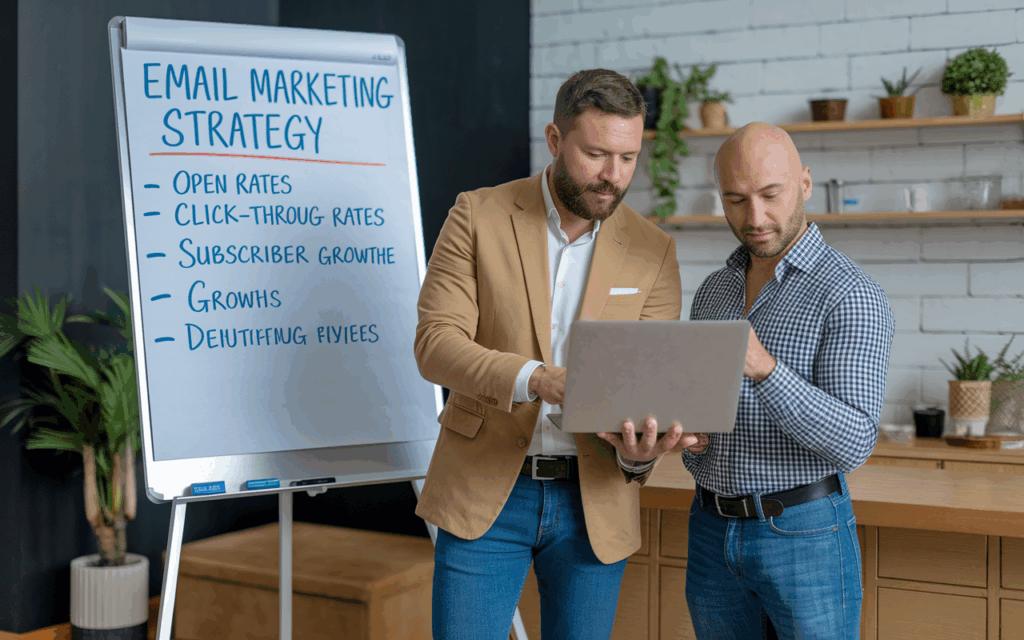
The most effective email marketing strategies for local businesses are building a permission-based list from real customer touchpoints, sending automated welcome and post-job follow-ups, segmenting by service and location, timing seasonal reminders, and asking happy customers for reviews. Measure success by calls, bookings and repeat jobs, not just opens.
Email works well for local businesses because most of the people on your list already know you. They bought from you, asked for a quote, or visited your shop. The goal is not to blast promotions but to stay useful and remembered so that when they need the service again, or a neighbor asks for a recommendation, your name comes up first. This guide walks through the strategies that matter most, with examples for service businesses, practices and retail stores.
Why Email Marketing Works for Local Businesses
Social media reach depends on algorithms you don’t control. Your email list is different: it is a direct line to customers who gave you permission to contact them. For a local business, that list is often made up of past customers, estimate requests and walk-in shoppers, which makes it one of the warmest audiences you have.
- Repeat business: reminders for maintenance, cleanings, seasonal service and reorders bring customers back
- Referrals and reviews: a well-timed follow-up makes it easy for happy customers to leave a review or pass your name along
- Lead nurturing: people who asked for a quote but didn’t book can be followed up without a sales call
- Low ongoing cost: once automations are set up, they run in the background
1. Build a Permission-Based Email List
A small list of people who want to hear from you beats a large list of strangers. Never buy lists. Purchased addresses tend to bounce, trigger spam complaints and damage the reputation of your sending domain. Instead, collect emails where customers already interact with you:
- Quote and contact forms on your website, with a clear opt-in checkbox for marketing emails
- Booking and scheduling software
- Invoices and point-of-sale systems, asking at checkout
- In-store sign-up at the counter or by QR code
- Events, workshops and community sponsorships
- A useful download, such as a seasonal maintenance checklist or a first-visit guide
Tell people what they are signing up for and how often you will email. “Seasonal reminders and two or three offers a year” sets better expectations than “join our newsletter.”
2. Set Up a Welcome Sequence
The first emails after someone signs up get the most attention, so automate them. A simple welcome sequence for a local business might include three messages over a week or two:
- Welcome and what to expect: thank them, confirm what they will receive, and include your phone number and hours
- Who you are: a short story about the business, your service area and what makes you different, with real photos
- Helpful next step: a common question answered, a checklist, or an invitation to book
3. Automate Follow-Ups Around the Customer Journey
The strategies that usually pay off most for local businesses are automations tied to real events, not one-off campaigns. Most email platforms can trigger them from your booking, CRM or point-of-sale data.
| Trigger | Email to send | Example |
|---|---|---|
| Quote requested but not booked | A short follow-up answering common questions | Window installer following up a week after an estimate |
| Job completed | Thank-you, care tips and a review request | Garage door company sending maintenance tips |
| Time since last visit | Reminder to book again | Dental practice sending a cleaning reminder |
| Season change | Seasonal service reminder | Pool company sending pool opening reminders in spring |
| Inactive customer | Win-back message with a simple reason to return | Furniture store announcing new arrivals |
4. Ask for Reviews and Referrals
Reviews matter for local search, and email is one of the easiest ways to ask. Send the request soon after the job while the experience is fresh, keep it short, and link straight to your Google Business Profile review form. Ask every customer the same way rather than only those you expect to be happy, since review platforms discourage selective asking. A separate referral email can thank loyal customers and make it easy to forward your contact details to a friend.
5. Segment Your List
Segmentation means sending different emails to different groups so each message is relevant. Local businesses don’t need complex segments. A few simple ones go a long way:
- By service: customers who bought a water heater don’t need your roofing offer
- By location: useful for businesses with more than one office or a wide service area
- By customer status: leads, first-time customers and repeat customers
- By timing: when they last bought or last booked
Personalization should follow the segment, not just the first name. “Your furnace is due for its fall tune-up” is more personal than “Hi Sarah” on a generic newsletter.
6. Write Subject Lines and Content People Open
Subject lines decide whether an email gets opened. Keep them short and specific, say what is inside, and avoid tricks. Misleading subject lines are not only bad practice, they are prohibited under federal law.
- Lead with the benefit or the reason: “Time to book your spring AC tune-up”
- Mention the local angle when it helps: “Open this Saturday in Encinitas”
- Use the preview text as a second line, not a repeat
- Send one main message per email, with one clear button
- Write like a person, sign with a real name, and include your phone number
Test two subject lines on larger sends to learn what your audience responds to, but judge the winner on clicks and bookings, not only opens.
7. Protect Your Deliverability
An email that lands in spam does nothing. Mailbox providers now expect senders to prove who they are. Google’s email sender guidelines require all senders to set up SPF or DKIM authentication, and bulk senders to Gmail must also use DMARC, offer one-click unsubscribe and keep spam complaint rates low.
- Send from your own domain, not a free Gmail or Yahoo address
- Set up SPF, DKIM and DMARC records with your email platform
- Remove addresses that bounce and people who haven’t opened or clicked in a long time
- Make unsubscribing easy, so annoyed people leave instead of hitting “spam”
- Keep a steady sending rhythm rather than long gaps followed by large blasts
8. Stay Compliant With CAN-SPAM
In the United States, commercial email is governed by the CAN-SPAM Act. The Federal Trade Commission’s CAN-SPAM compliance guide for business sets out the main rules, and penalties are charged per email, so they add up quickly.
- Don’t use false or misleading header information or sender names
- Don’t use deceptive subject lines
- Identify the message as an ad where required
- Include a valid physical postal address
- Tell recipients how to opt out, and honor opt-outs promptly
- You remain responsible even if an agency or vendor sends email for you
If you also send text messages or email people outside the U.S., other rules apply, so check with your platform or legal advisor.
9. Measure What Matters
Open rates are less reliable than they used to be. Apple’s Mail Privacy Protection loads email content in the background, which can count an email as opened when nobody read it. Use opens as a rough signal and focus on metrics closer to revenue:
- Click rate: the share of recipients who clicked a link
- Conversions: calls, bookings, quote requests or purchases that came from email, tracked with UTM tags on your links
- Reviews earned: from review request emails
- Unsubscribe and complaint rates: warning signs that frequency or relevance is off
- List growth: new subscribers each month and where they came from
Common Mistakes to Avoid
- Sending only discounts, which trains customers to wait for a sale
- Emailing too rarely, so people forget who you are and mark you as spam
- Long newsletters with many competing links
- Images with all the text inside them, which some inboxes block
- No phone number or address in the email
- Forgetting that most people read email on a phone
Frequently Asked Questions
What is the best email marketing strategy for a local business?
For most local businesses, the best results come from automated emails tied to real events: a welcome sequence, follow-ups after quotes, thank-you and review requests after jobs, and timely service reminders. These reach warm customers when they are most likely to act.
How often should a local business send marketing emails?
There’s no single right number. Many local businesses send a regular update monthly or seasonally, plus automated emails triggered by customer actions. Consistency matters more than volume, and unsubscribe and complaint rates will tell you if you are sending too often.
Is it legal to email customers who bought from me?
In the U.S., the CAN-SPAM Act allows commercial email as long as you follow its rules, including honest headers and subject lines, a physical address and a working opt-out. Collecting clear opt-in consent is still the best practice and helps deliverability.
Why are my marketing emails going to spam?
Common causes are missing SPF, DKIM or DMARC records, sending from a free email address, old or purchased lists with many bounces, and high complaint rates. Cleaning your list and authenticating your domain usually help.
What should a local business measure in email marketing?
Focus on clicks, calls, bookings and purchases that came from email, plus reviews earned and unsubscribe rates. Open rates are less reliable because privacy features can record opens that never happened.
Get Help With Email Marketing
Local Blitz has helped local businesses with digital marketing since 2009, from offices in San Diego and Indianapolis. We can set up your list, automations, domain authentication and tracking, then report on the calls and leads email produces. Learn about our email marketing agency services and email marketing in San Diego, or book a free strategy call.
Is AI recommending your business?
We will ask ChatGPT, Gemini and Google AI about your business and show you what they say. It is free.
Want More Customers From Search?
Book a free strategy call, or call San Diego (858) 225-6877 or Indianapolis (317) 672-1156.