
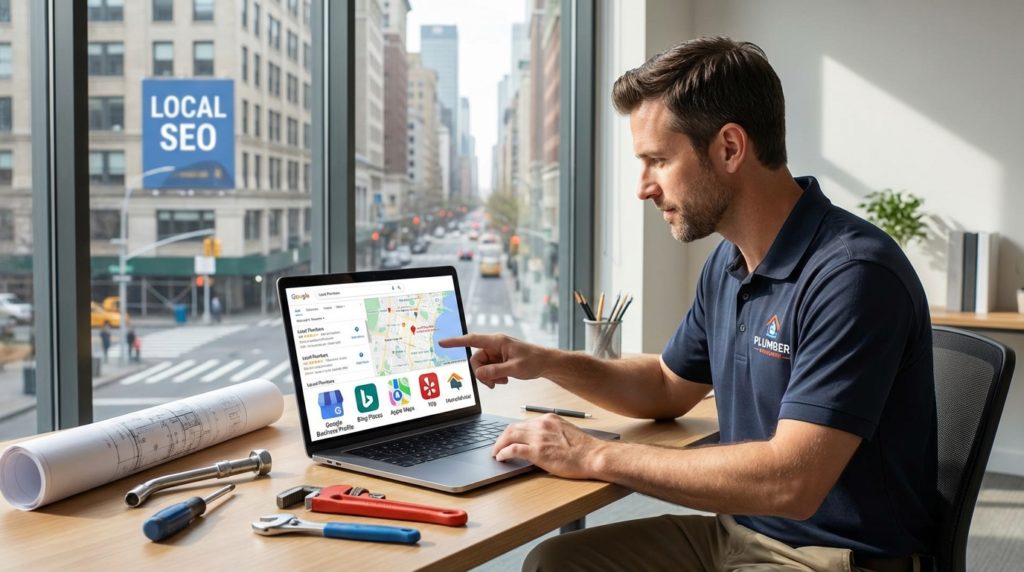
In the competitive digital landscape of the home service industry, establishing a robust online presence is no longer optional for trade professionals. For a Master Plumber or a multi-location HVAC contractor, the primary mechanism for sustainable business growth is a targeted Local SEO strategy. Unlike general search engine optimization, Local SEO for plumbers focuses specifically on optimizing a digital footprint to rank for geo-specific queries, such as “Emergency plumber near me” or “Water heater installation in [City].”
The modern consumer journey begins on a mobile device. When a homeowner faces a burst pipe or a clogged drain, they rely on Google Maps and organic search results to find a licensed plumber immediately. Therefore, mastering the local ecosystem—spanning from the Google Business Profile to technical SEO—is essential for lowering the cost per lead and maximizing customer acquisition.
TL;DR Summary
Local SEO for plumbers requires a multifaceted approach centering on a fully optimized Google Business Profile to secure placement in the Local Pack. Success depends on maintaining NAP consistency across directories like Yelp and Angi, generating authentic 5-star ratings to boost prominence, and creating location-specific website content. By leveraging technical tools like Schema.org and monitoring metrics via Google Analytics, plumbing contractors can dominate local search results and drive high-quality plumbing leads.
Google Business Profile Drives Local Pack Visibility
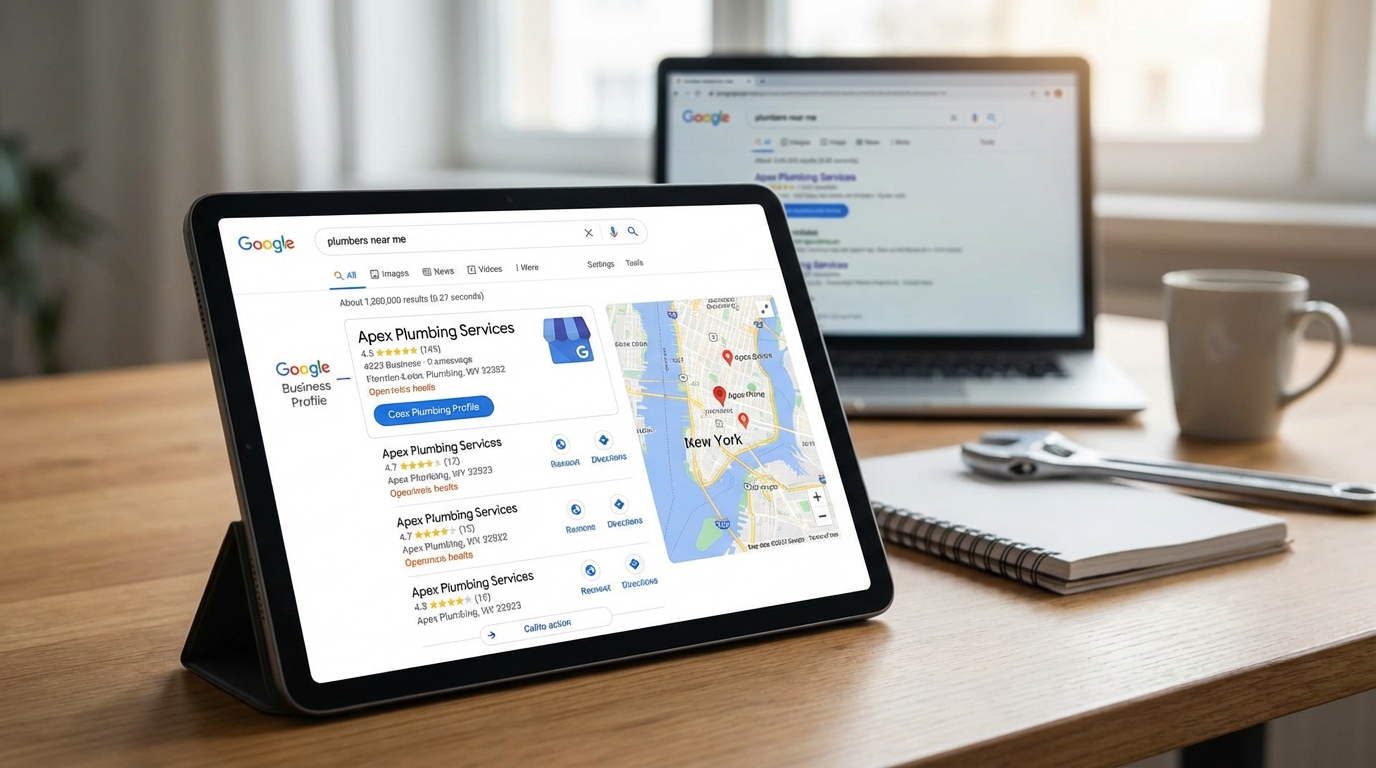
The cornerstone of any effective local campaign is the Google Business Profile (formerly Google My Business). This platform serves as the primary data source for the Google Local Pack—the coveted block of three business listings that appears at the top of search results accompanied by a map. For a Service Area Business (SAB) like a plumbing company, this profile dictates online visibility more than any other single factor.
To maximize Map rankings, the profile must be meticulously claimed, verified, and optimized. This involves selecting the correct primary category (e.g., Plumber) and secondary categories (e.g., Drain cleaning service, Gas line repair). Utilizing all available fields, including the business description and service menu, signals relevance to the local algorithm.
How does profile optimization impact local search ranking?
Optimization directly influences the three pillars of local search: Proximity, Relevance, and Prominence. By regularly updating the profile with photos of recent projects (e.g., a bathroom remodeling job or a tankless water heater installation), a business signals activity to search engines. Furthermore, utilizing the “Updates” feature acts similarly to social media marketing within the Google ecosystem, keeping potential customers informed about services and offers.
It is also crucial to manage visibility across other mapping platforms. While Google is dominant, ensuring presence on Bing Places and Apple Maps captures the remaining market share of mobile users. These platforms often aggregate data, so consistency here reinforces the legitimacy of the business entity.
Strategic Content Marketing Expands Organic Search Reach
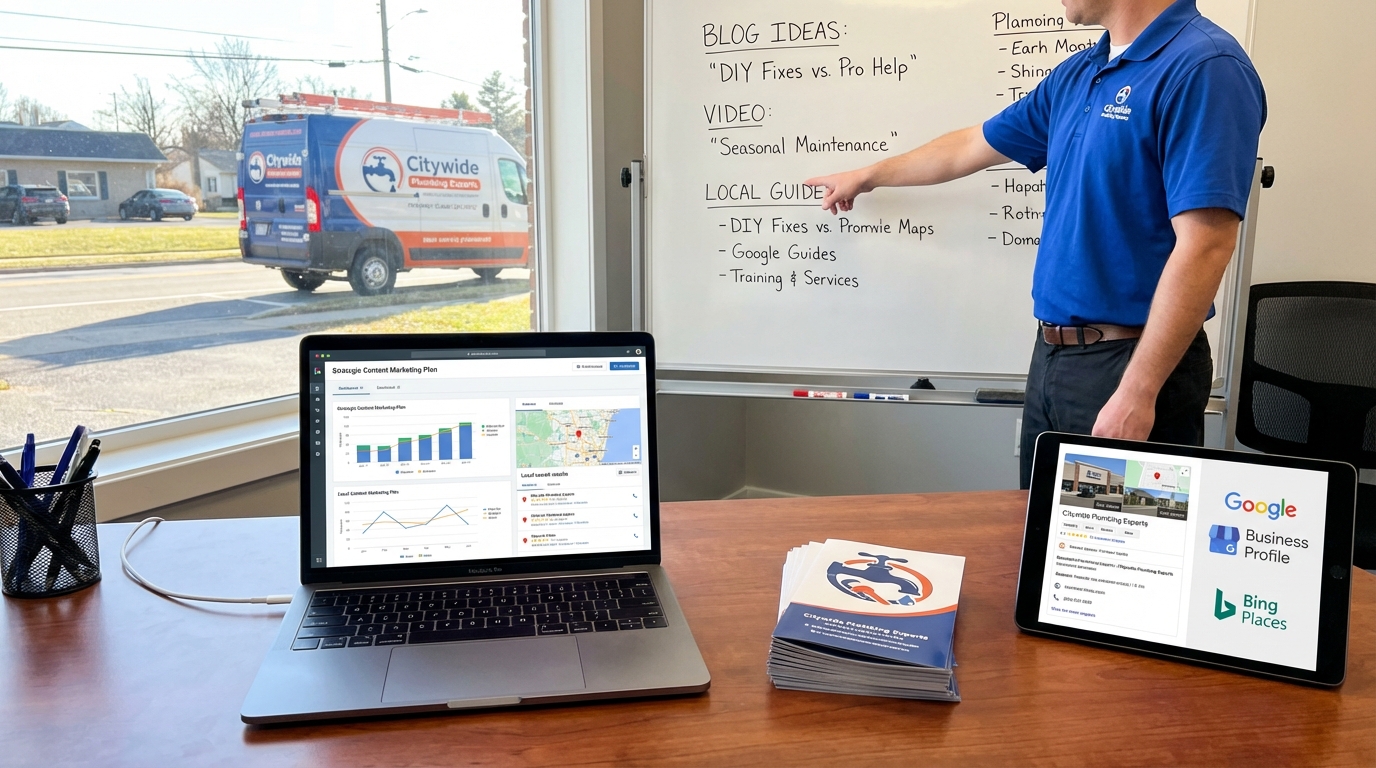
While the Map Pack attracts immediate attention, organic search results below the maps offer substantial traffic opportunities. A high-performing plumbing website requires a content strategy that addresses specific user intent. This involves moving beyond a generic homepage and developing dedicated landing pages for each core service, such as leak detection services, sewer line repair, and kitchen remodeling.
Content marketing for plumbers should also include a blog that targets long-tail variations of keywords. Articles addressing common homeowner questions—for example, “Why is my water heater making noise?” or “How to unblock a sink”—establish authority. This “Blogging for plumbers” strategy attracts users at the top of the marketing funnel who may eventually require professional services.
Which keywords drive the highest conversion rates?
Targeting the right keywords is critical for improving the conversion rate. Broad terms like “plumber” are highly competitive and often have low intent. Instead, an effective SEO strategy focuses on high-intent, LSI keywords such as:
- Emergency plumber near me (Urgent need, high conversion)
- 24 hour plumber (Specific temporal requirement)
- Affordable plumbing repair (Price-sensitive intent)
- Licensed plumber for commercial projects (Trust-based intent)
Integrating these terms into H1 tags, meta tags, and alt text helps search engines understand the page context. Furthermore, employing internal linking between high-authority blog posts and service pages distributes Page Authority throughout the site, signaling importance to crawlers.
Consistent NAP Citations Build Domain Authority
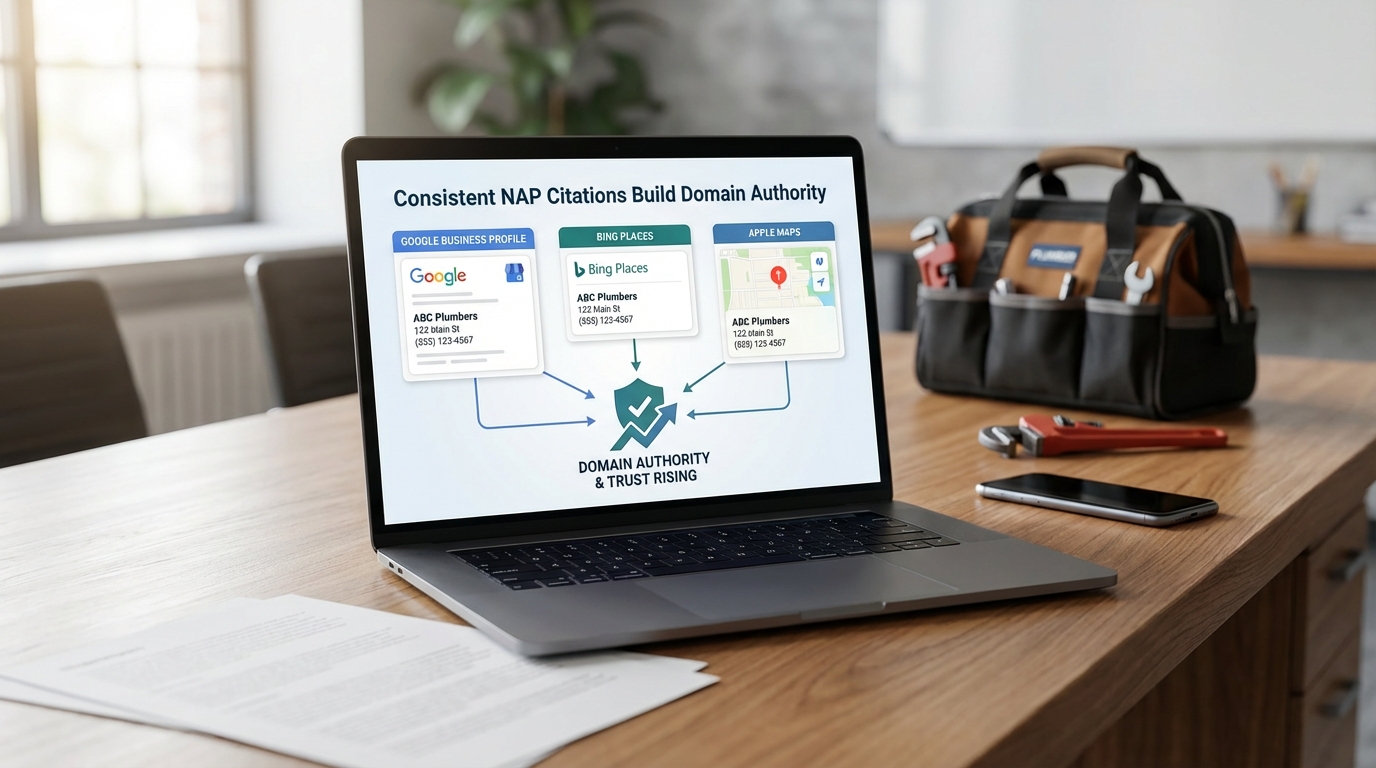
Search engines validate the existence and trustworthiness of a business through citations—mentions of the business name, address, and phone number (NAP) across the web. NAP Consistency is a critical ranking factor; discrepancies between a listing on Facebook and a listing on the Better Business Bureau can confuse search algorithms and dilute Domain Authority.
Plumbers must ensure their business is listed accurately on major data aggregators and relevant business directories. This process, often referred to as citation building, establishes the digital footprint required for high rankings. Tools like BrightLocal, Whitespark, or Moz Local can be utilized to audit existing citations and identify duplicate listings that require suppression.
Where should a plumbing business list their services?
A comprehensive citation profile includes a mix of general, industry-specific, and hyper-local directories. A balanced portfolio ensures maximum reach and authority building.
| Directory Type | Key Platforms | Strategic Benefit |
|---|---|---|
| Major Platforms | Google Business Profile, Bing Places, Apple Maps, Yelp | High traffic sources that directly impact Map rankings and mobile visibility. |
| Industry Specific | HomeAdvisor, Angi, Thumbtack, Blue Book | High relevance signals; attracts users specifically looking for contractors. |
| Social & Local | Facebook, Nextdoor, LinkedIn, Instagram | Builds brand awareness and social proof within the local community. |
Beyond citations, securing backlinks from local sources—such as local news outlets, sponsorships of local sports teams, or partnerships with other trades—signals to Google that the business is an integral part of the local community. This local link building is a powerful differentiator in competitive markets.
Online Reputation Management Increases Click-Through Rates
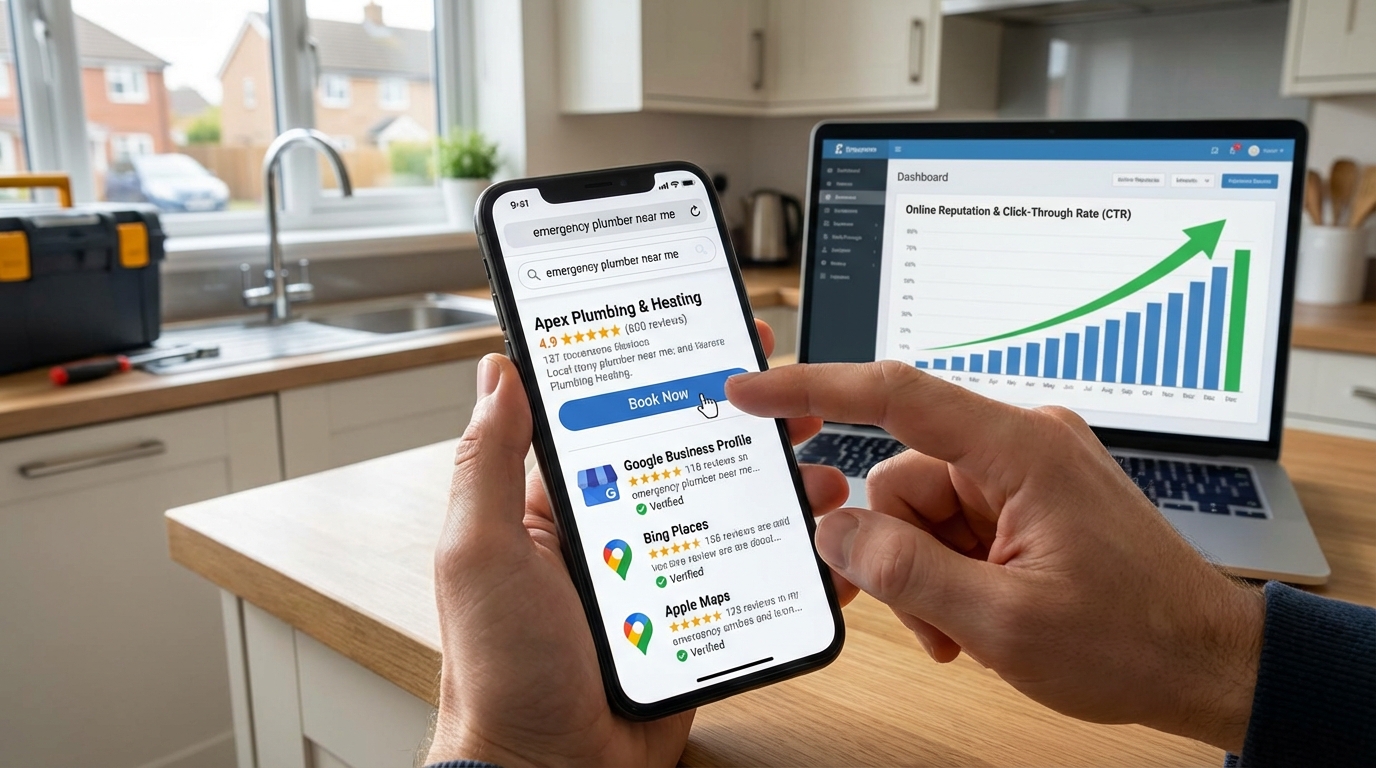
In the service industry, trust is the currency of trade. Online reviews are the digital equivalent of word-of-mouth recommendations. A plumbing company with a high volume of 5-star ratings and detailed testimonials will naturally enjoy a higher Click-Through Rate (CTR) than competitors with lower ratings, even if they rank slightly lower. Review management is therefore a critical component of off-page optimization.
Active management involves generating new reviews through automated follow-ups using CRM for plumbers or field service management software. It is equally important to respond to all reviews—both positive and negative. A professional response to a negative review on Yelp or Google Maps demonstrates a commitment to customer service and can mitigate potential reputation damage.
How does review velocity affect local algorithms?
Search engines look at review quantity, quality, and velocity (the rate at which new reviews are posted). A steady stream of fresh feedback indicates that the business is active and currently serving customers. Conversely, a profile that hasn't received a review in six months may be deemed less relevant. Businesses must avoid “review gating” (filtering out bad reviews before they are posted), as this violates the policies of platforms like Google and can lead to penalties.
Technical Site Architecture Supports Mobile Friendly Experience
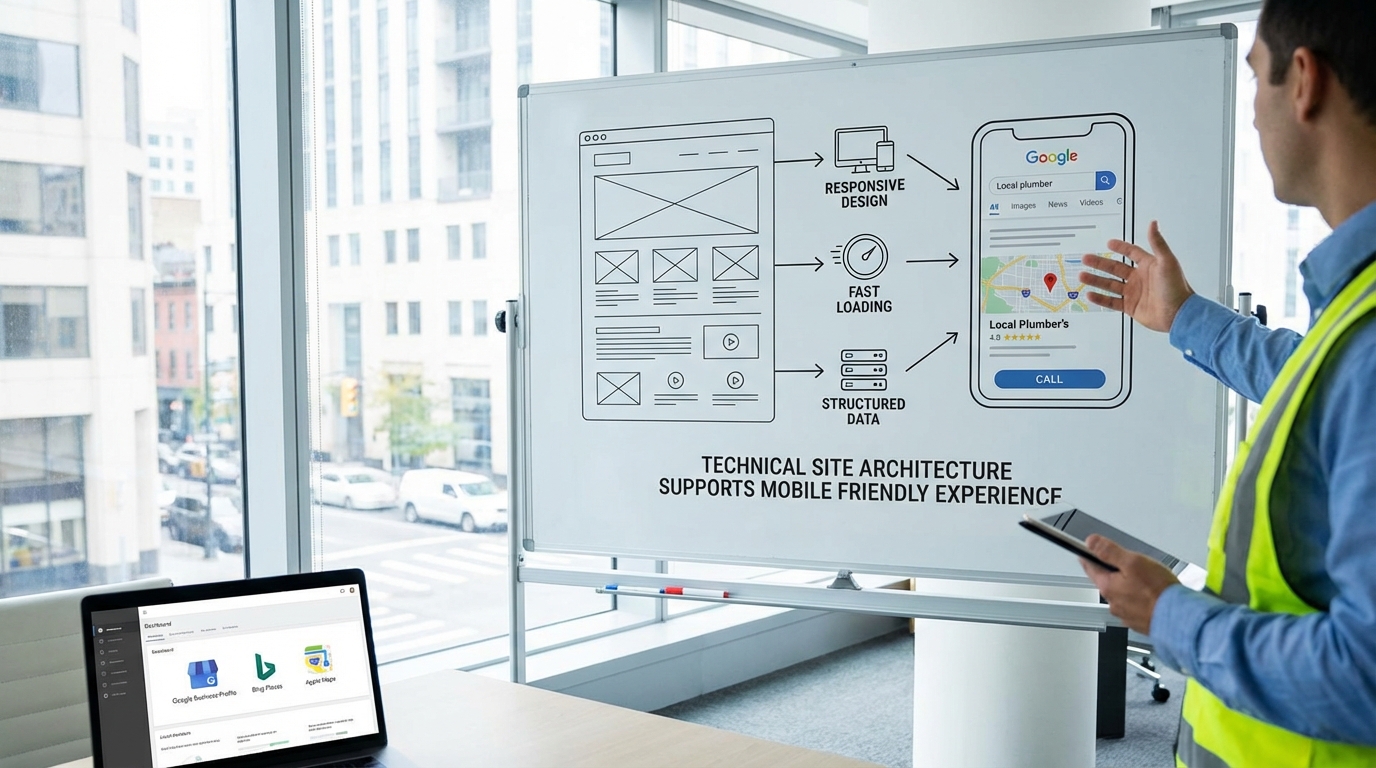
Even the best content will fail to rank if the underlying website structure is flawed. Technical SEO ensures that search engines can crawl and index the site efficiently. For plumbers, a mobile friendly design is non-negotiable, as the majority of emergency plumber searches occur on smartphones. Site speed is also a ranking factor; slow-loading pages lead to a high bounce rate, signaling a poor user experience to Google.
Implementing Schema.org markup, specifically JSON-LD for Plumber or LocalBusiness, provides search engines with structured data about the business, including hours of operation, accepted currencies, and service areas. This code helps Google understand the entity behind the website and can lead to rich snippets in search results.
What metrics indicate a successful campaign?
To measure the ROI of plumbing advertising and SEO efforts, businesses must utilize tracking tools. Integrating Google Analytics and Google Search Console provides data on organic traffic, keyword rankings, and user behavior. However, for service businesses, the most important metric is leads.
Key Performance Indicators (KPIs) for plumbing SEO include:
- Click-to-call actions from the Knowledge Panel.
- Form submissions on landing pages.
- Direction requests on Google Maps.
- Keyword rankings for “near me” and service-specific terms.
Advanced tracking using tools like SEMrush or Ahrefs allows for rank tracking and competitor analysis. Additionally, call tracking software can attribute phone leads to specific marketing channels, clarifying the difference in performance between SEO vs PPC.
By executing a strategy that combines on-page optimization, technical excellence, and robust off-page authority building, a plumbing business can secure long-term dominance in their local market. Whether utilizing WordPress with plugins like Yoast SEO or RankMath, or hiring a dedicated agency, the investment in local search is an investment in the company's future asset value.
Frequently Asked Questions
How long does it take for Local SEO to work for plumbers?
Local SEO is a long-term strategy. While setting up a Google Business Profile can yield quick initial wins, seeing significant movement in competitive markets typically takes 3 to 6 months. Consistent citation building, content creation, and review generation are required to build the necessary authority and trust with search engines.
What is the difference between Organic SEO and Local SEO?
Organic SEO focuses on ranking a website for keywords globally or nationally without geographical constraints. Local SEO specifically targets search queries with local intent (e.g., “plumber near me”) and focuses on ranking in the Local Pack (map results) and local organic listings. It relies heavily on proximity, Google Business Profile optimization, and local citations.
Why are my Google Business Profile rankings dropping?
Rankings can drop due to several factors: new competitors entering the market, inconsistent NAP (Name, Address, Phone) information across the web, a lack of recent reviews, or algorithm updates. It could also be due to “listing suspension” if Google detects policy violations. Regular audits using tools like BrightLocal can help diagnose these issues.
Do plumbers need a blog for SEO?
Yes. Blogging allows a plumbing business to rank for long-tail keywords and informational queries (e.g., “how to fix a running toilet”). This content builds topical authority, attracts potential customers early in the buying cycle, and provides opportunities for internal linking to high-value service pages.
Is it better to focus on SEO or PPC for plumbing leads?
A balanced approach is best. PPC (Pay Per Click) provides immediate leads but stops working as soon as you stop paying. SEO provides a lower cost per lead over time and sustainable long-term growth. Most successful plumbing companies use PPC for immediate cash flow while building their organic SEO presence for long-term profitability.