
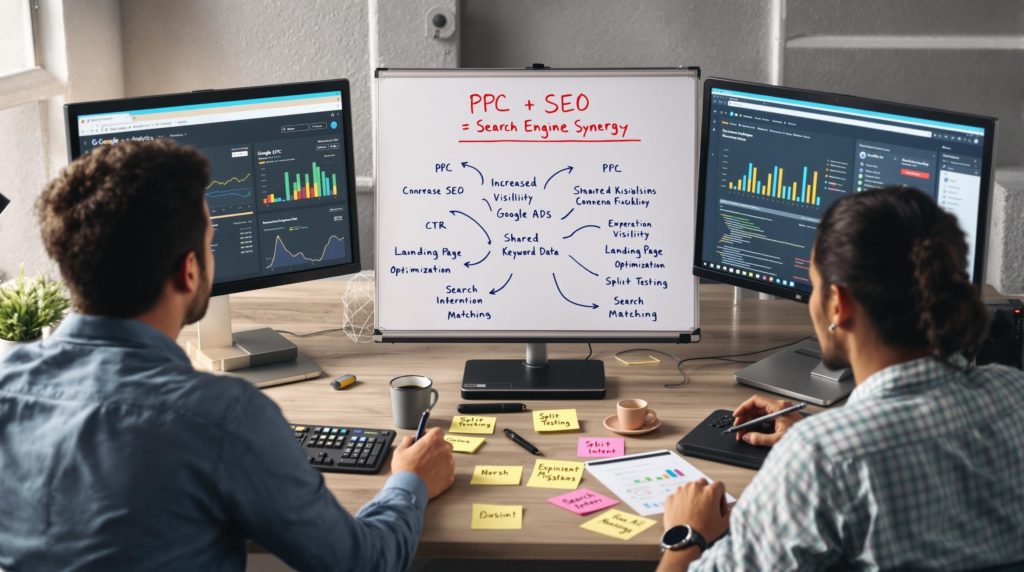
PPC and SEO work together by covering the same search results from two sides: Google Ads buys a place in the ad slots right away, while SEO earns a place in the organic results over time. Running ads won’t raise your organic rankings. Google states that investment in paid search has no impact on organic ranking. The benefit comes from sharing what each channel teaches you: keyword data, landing pages and messaging. Used together, they let a local business show up for more of the searches that bring in customers.
An earlier version of this article said that ad traffic helps your SEO. That isn’t how Google says it works, so we’ve rewritten it with the accurate version and the practical ways the two channels do support each other. For each channel on its own, see our Google Ads hub and our SEO hub.
PPC vs SEO: The Basic Difference
PPC, or pay-per-click, usually means Google Ads search campaigns for a local business. You bid on keywords, Google runs an auction for each search, and with cost-per-click bidding you pay when someone clicks. SEO, or search engine optimization, is the work of getting your pages to rank in the unpaid results and in the Google map pack.
| PPC (Google Ads) | SEO | |
|---|---|---|
| Where you show | Ad slots above and below the organic results | Organic results and the map pack |
| How you pay | Per click, from your ad budget | No cost per click; you invest in the site, content and local presence |
| Speed | Ads can run as soon as campaigns are approved | Builds over months |
| Control | You choose keywords, locations, schedule and budget | Google decides rankings based on relevance and quality |
| When you stop | Ads stop showing | Rankings can hold for a while, but need upkeep |
For a deeper look at how ads are ranked, see how Google Ads works.
Does Google Ads Help SEO Rankings?
No. Google’s help article on measuring paid and organic search results says investment in paid search has no impact on your organic search ranking, and that Google maintains a strict separation between its search business and its advertising business. Spending more on ads won’t move your organic positions up or down.
That separation runs both ways. A strong organic ranking doesn’t lower your ad costs on its own either. Ad position is decided by Ad Rank, which looks at your bid, the quality of your ad and landing page, and other auction factors.
How PPC and SEO Work Together
The two channels don’t feed each other’s rankings, but they share a lot. Here’s where they help each other in practice.
More Places on the Results Page
One search can show ads, a map pack and organic listings. Appearing in more than one of those spots gives a searcher more chances to choose you. Ads can also cover searches where you don’t rank yet, such as a new service or a nearby city you’ve just started serving.
Keyword Data From Google Ads
The search terms report in Google Ads shows the actual searches that triggered your ads, alongside clicks and conversions when tracking is set up. That tells you which searches lead to calls and forms. Those are strong candidates for service pages, blog posts and FAQ content on the SEO side. Google lists “discover additional keywords” as one of the uses of its paid and organic report.
Search Console Data for Better Ads
It works the other way too. Google Search Console shows the queries your site already gets organic impressions for. Some of those may be worth adding to campaigns, or worth adding as negative keywords if they’re searches you don’t want to pay for.
Shared Landing Pages
A clear service page that matches what people search for is useful to both channels. In Google Ads, landing page experience is one of the Quality Score components and part of how ad quality is judged in the auction. For SEO, a focused, useful page is what you want ranking anyway. Our guide to Google Ads landing pages covers what to include.
Message Testing
Ads give you quick feedback on wording. If a headline about same-day service gets far more clicks than one about price, that tells you something about what your customers care about. You can use that when writing page titles and meta descriptions, then see how they do in Search Console.
Using the Google Ads Paid and Organic Report
Google Ads has a paid and organic report that shows ad and organic results for the same queries side by side. To use it, you need a Search Console account for your website, linked to your Google Ads account. It only counts text ad performance. Google lists three uses:
- Discover additional keywords: find queries where you appear organically but have no ads.
- Optimize presence on high-value queries: see where you show in both, one or neither for the searches that matter most.
- Measure changes holistically: watch how paid and organic results move when you change campaigns or pages.
Google also notes that organic results aren’t limited by your campaign’s targeting settings. Your ads only show in the locations and languages you target, but your organic listings can show anywhere.
When to Lean on PPC, SEO or Both
| Situation | What usually makes sense |
|---|---|
| New business or new website | Ads for leads now while SEO builds |
| New service or new service area | Ads to test demand, then build pages for what works |
| Already ranking well for key services | Ads on high-value searches where you aren’t showing, plus brand protection if competitors bid on your name |
| Very tight budget | Focus on one channel first, often SEO and your Google Business Profile, or a small, tightly targeted search campaign |
| Seasonal or emergency services | Ads to scale up quickly when demand rises |
How much to put into ads depends on your market and goals. Our guide on what to budget for Google Ads campaigns explains the factors.
Measuring Both Channels Together
The mistake we see most is judging each channel on its own, with no shared view of where leads came from. Track calls and forms by source so you can compare cost per lead from ads with leads from organic search and the map pack. Our guide on tracking ad performance for a service-based business covers call tracking and forms.
- For ads: conversions, cost per lead and search terms.
- For SEO: rankings, organic clicks in Search Console, and calls and direction requests from your Google Business Profile.
- For both: total leads by service, and which searches show up in both reports.
Other Paid Channels
Search ads aren’t the only paid option. Performance Max runs across Google’s channels from one campaign, which we cover in Performance Max for local businesses. Google also offers a separate ad product for local service providers, explained in our guide to home service ads. And if you’re deciding between Google and social, read Google Ads vs Meta Ads for local service businesses.
Whichever mix you choose, the basics of good Google Ads still apply. Your Quality Score components show where ads and pages need work, and your keyword match types decide which searches you pay for.
Frequently Asked Questions
Does running Google Ads improve my SEO?
No. Google states that investment in paid search has no impact on organic search ranking, and that it keeps its search and advertising businesses strictly separate. The two help each other indirectly, through shared keyword data, landing pages and messaging.
Should I run ads on keywords I already rank for organically?
Sometimes. It can make sense for your highest-value searches, or when competitors are bidding on your business name. Google’s paid and organic report shows where you appear in ads, organic results, both or neither, which helps you decide case by case.
Is PPC or SEO better for a local business?
They do different jobs. PPC brings in leads quickly and stops when you stop paying. SEO takes longer but keeps working as long as the site and listings are maintained. Many local businesses use ads while SEO builds, then adjust the balance based on cost per lead from each.
How do I see paid and organic results together?
Link your Google Search Console account to Google Ads and open the paid and organic report. It shows text ad and organic performance for the same queries, so you can find keyword gaps and see how changes affect both.
Can Google Ads keyword data help my content?
Yes. The search terms report shows the real searches that triggered your ads and which ones led to conversions. Those searches are good topics for service pages and FAQs, because you already know they bring in customers.
Get Help With PPC and SEO
Local Blitz has been in business since 2009, with offices in San Diego (Encinitas) and Indianapolis. We run Google Ads and SEO for local businesses and report on calls, leads and rankings in one place. There are no cookie-cutter packages, plans are month-to-month, and ad spend is paid directly to Google, separate from our management fee. See our pricing page for how costs are set, or book a free strategy call. If one channel makes more sense for you than both, we’ll say so.
Is AI recommending your business?
We will ask ChatGPT, Gemini and Google AI about your business and show you what they say. It is free.
Want More Customers From Search?
Book a free strategy call, or call San Diego (858) 225-6877 or Indianapolis (317) 672-1156.