
To get your business recommended by ChatGPT, Gemini and other AI search tools, make it easy for them to find, confirm and describe you: accurate listings, a clear website, structured data that matches the page, real reviews, and mentions on trusted sites. AI assistants build answers from sources they can read and cross-check, so the more consistent and specific those sources are, the more likely your business is to be named.
Outcome: By following this guide, you will have the foundations AI tools look for in place. There’s no fixed timeline: listing fixes take days to weeks, while reviews and mentions build over months. If you serve customers in a specific city, also read our guide to AI search optimization for local businesses, which covers which listings each AI tool reads.
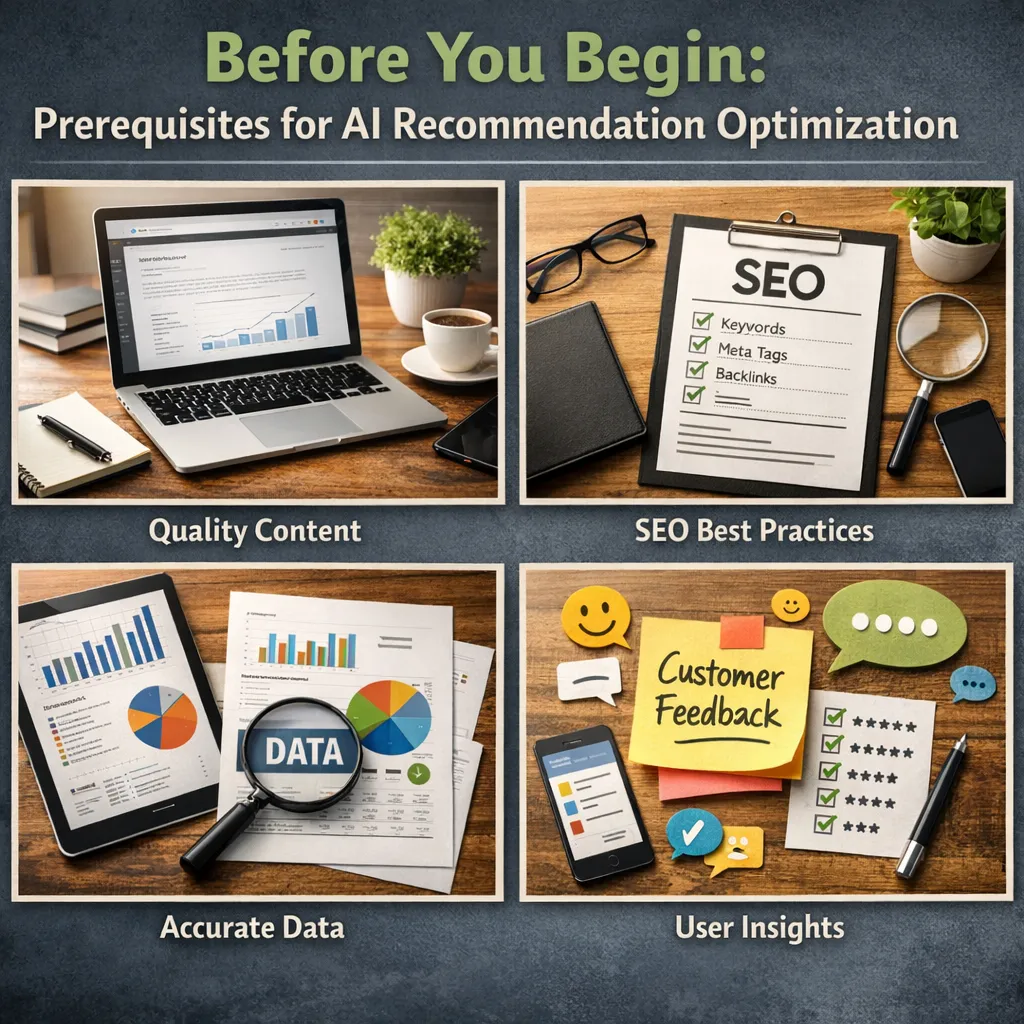
Before You Begin: Prerequisites for AI Recommendation Optimization
Required Resources:
- A business website that search engines can crawl and index, with a page for each main service
- A verified Google Business Profile
- Access to your website’s CMS to edit pages and add structured data
- Your exact business name, address and phone number, written the same way everywhere
- A way to ask customers for reviews
- A few hours a week to work through the steps and keep them up
Step 1: Establish Authoritative Online Presence with Verified Business Listings
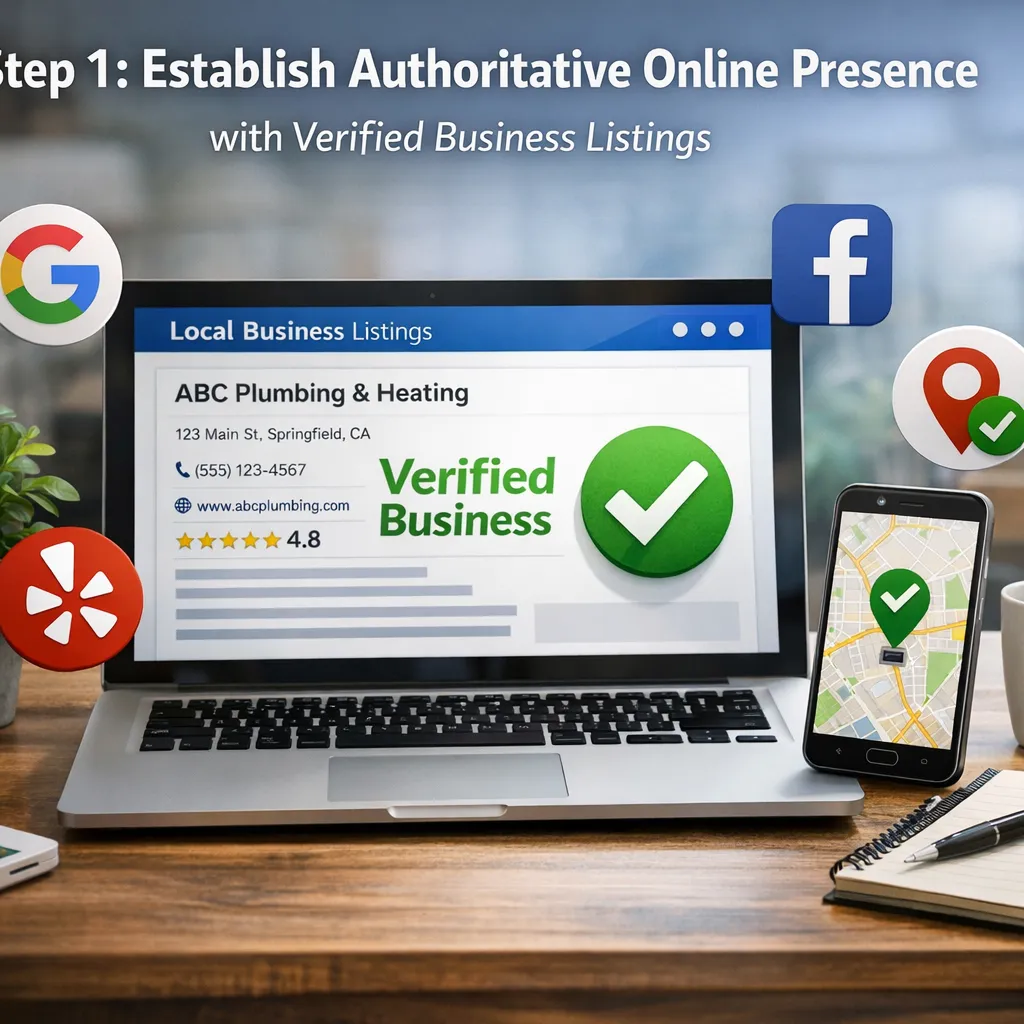
AI assistants answer recommendation questions by searching the web and reading what they find. Your listings are among the first places they look, so they need to exist, be verified and agree with each other.
1.1 Optimize Business Directories and Data Aggregators
Claim your profiles on the platforms that matter for your industry, such as Yelp, Bing Places for Business, Apple Business Connect and trade directories. Keep your name, address and phone number (NAP) identical everywhere, and fix or remove duplicates. Conflicting details make a business harder to confirm. Yelp matters more now: in 2026 it licensed its reviews and business information to OpenAI for ChatGPT’s local answers.
1.2 Complete Your Google Business Profile
Add your services, hours, photos and a plain description of what you do and where, and keep posting updates. Reply to reviews. Google’s own guidance for its AI features tells businesses to keep Business Profile information up to date, and Gemini draws on the same Google data.
1.3 Build Professional Association Memberships
Join trade organizations and earn the certifications your customers recognize, then list them on your website. Membership directories and certification listings are more third-party sources that confirm who you are and what you do.
Step 2: Implement Structured Data and Schema Markup for Entity Recognition
Structured data spells out your business details in a format machines can read without guessing. Google says no special schema is required for its AI features, so treat schema as a clarity aid, not a shortcut. Whatever you mark up must match what visitors see on the page.
2.1 Add Organization Schema
Add Organization schema to your homepage in JSON-LD with your legal name, logo, address, contact details and links to your official social profiles (the sameAs property). This ties your website to your other profiles as one entity.
2.2 Implement LocalBusiness and Service Schemas
If you serve customers in a place, add LocalBusiness schema with your address, opening hours and service area. Describe each main service with Service schema on its own page. See what schema is and how it works.
2.3 Structure Content with Semantic HTML
Use one H1 per page and a logical heading order, descriptive alt text on images, and canonical URLs. Put common questions and answers on the page in plain text, where AI tools and visitors can both read them.
Step 3: Create Expert-Level Content Demonstrating E-E-A-T
Experience, expertise, authoritativeness and trust (E-E-A-T) is how Google describes helpful content, and the same qualities make a page worth quoting in an AI answer: it’s specific, accurate and clearly written by someone who knows the subject.
3.1 Develop Thought Leadership Content
Publish in-depth articles that answer the questions your customers actually ask, using your own experience, examples and case studies. Group related articles into topic clusters that link to each other. Our explainer What Is Answer Engine Optimization (AEO) and Why Does It Matter? covers how this fits together.
3.2 Optimize for Factual Accuracy and Data Freshness
Cite sources for any statistic, with the year. Review key pages regularly and update anything that has changed. Use specific dates (“March 2026”) instead of “recently” or “this year,” so readers and AI tools know how current the information is.
3.3 Create Conversational Content for Natural Language Processing
Answer the question in the first sentence or two, then explain. Use headings that match how people phrase questions, short paragraphs and active voice. This makes it easy to lift a clear answer from the page.
Step 4: Build Credibility Signals Through Citations and External Validation
AI tools don’t only read what you say about yourself. They also read what others say about you. In BrightLocal’s 2024 study of local searches in ChatGPT, business websites made up 58% of cited sources and mentions on other sites made up 27%.
4.1 Acquire High-Quality Backlinks from Authoritative Sources
Earn links and mentions from industry publications, local news, associations and partners. Relevance matters more than volume: one article on a respected site in your field is worth more than many low-quality links. Our guide to AI search optimization explains how we approach this for clients.
4.2 Generate Customer Testimonials and Online Reviews
Ask every happy customer for a review on Google and on the platforms that matter in your industry, and reply to each one. Reviews that mention the specific service help AI tools describe what you’re good at. Never buy reviews or offer rewards for them; it breaks platform rules.
4.3 Secure Press Releases and Brand Mentions
Share real news, such as a new location, a milestone or a community project, with local and trade media. Coverage on respected sites is far more useful than a press release that only appears on syndication sites. Keep track of where your business is mentioned and correct any wrong details.
Step 5: Monitor and Maintain AI Discoverability
AI tools change their sources and features often, so this is ongoing work, not a one-time setup.
5.1 Optimize Crawl Accessibility
Check that your robots.txt and security tools don’t block the crawlers AI search tools use, such as Googlebot, Bingbot and OAI-SearchBot (OpenAI’s search crawler). GPTBot and Google-Extended control AI training, which is a separate decision from appearing in search. Keep an up-to-date XML sitemap and make sure your pages load quickly on phones.
5.2 Track AI Visibility Metrics
Each month, ask ChatGPT, Gemini, Claude, Perplexity and Copilot the questions your customers ask and record whether you’re named and how you’re described. Track referral traffic from AI tools in your analytics. Our guide to tracking AI search visibility walks through a simple method.
5.3 Maintain Content Freshness
Review your most important pages on a regular schedule, update facts and examples, and add new articles when customers start asking new questions.
Troubleshooting: Common AI Recommendation Issues
If ChatGPT doesn’t mention your business: Search for your business name in ChatGPT and see what it finds. Check that your website is indexed, that your Yelp and other key listings exist and are accurate, and that your service pages clearly say what you do and where.
If recommendations are inconsistent: Audit your NAP across directories, merge duplicate listings, and make sure your website and profiles describe your services the same way.
If recommendations include incorrect information: Find where the wrong detail comes from (an old listing, a directory, an outdated page) and fix it at the source. Update your Google Business Profile and website first. How quickly AI answers reflect the fix depends on when each tool next reads those sources.
If visibility decreases suddenly: Check that your site is still accessible to crawlers, that nothing changed in your robots.txt or security settings, and that your listings are still live and verified.
Next Steps: Advanced AI Recommendation Optimization
Once these five steps are in place, look at which competitors AI tools recommend for your key questions and what sources they cite, then close the gaps. Expand your topic clusters, and build relationships that lead to mentions on the sites AI tools already trust in your industry.
Keep building real-world credibility through speaking, published work and certifications. These show up in the sources AI tools read, and they build on each other over time.
Measure results the same way you’d measure any marketing channel: track leads and sales from AI referrals and ask new customers how they found you. If you’d like help, book a free strategy call with Local Blitz.
Is AI recommending your business?
We will ask ChatGPT, Gemini and Google AI about your business and show you what they say. It is free.
Want More Customers From Search?
Book a free strategy call, or call San Diego (858) 225-6877 or Indianapolis (317) 672-1156.