
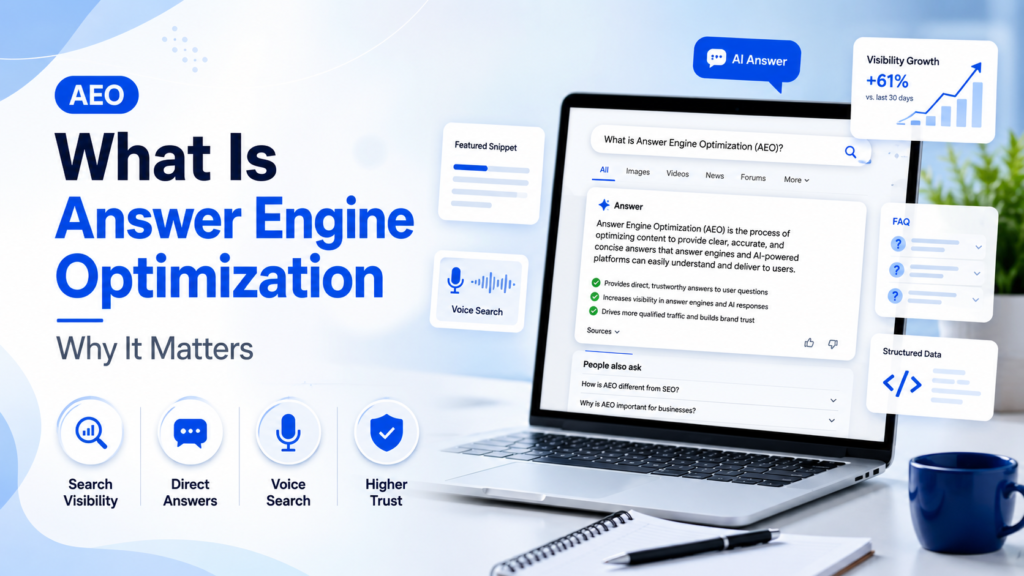
Answer Engine Optimization (AEO) is the practice of structuring and formatting web content to be selected, parsed, and presented as direct answers by AI-powered answer engines, voice assistants, and conversational search platforms including ChatGPT, Google Assistant, Alexa, Siri, and Cortana. Unlike traditional Search Engine Optimization (SEO), which focuses on ranking in search engine results pages (SERP), AEO prioritizes becoming the singular, authoritative response to user queries in zero-click searches, Featured Snippets, and Answer Boxes.
Why Answer Engine Optimization Matters in 2025

According to research published in 2024, over 58% of searches now result in zero-click results where users receive direct answers without visiting websites. The rise of Conversational AI and voice-activated devices has fundamentally altered search behavior patterns. Users increasingly expect instant answers through natural language queries rather than traditional keyword-based searches. This shift represents a fundamental change in information retrieval, requiring businesses to adapt their content strategy for answer engines rather than traditional search engines.
The importance of answer engine optimization extends beyond visibility. Businesses that implement AEO strategies see improved search rankings, enhanced content accessibility, and increased trust signals. When your content appears in knowledge panels, featured snippet optimization directly impacts brand authority and user query intent satisfaction. For comprehensive guidance on implementing these strategies, explore AEO explained for businesses to understand how answer engines transform digital marketing.
Key Characteristics of Answer Engine Optimization

Answer engine optimization differs from semantic SEO through five defining characteristics that determine content selection by question answering systems.
1. Structured Data Implementation
AEO requires comprehensive schema markup using JSON-LD, Microdata, or RDFa formats. FAQ Schema, HowTo Schema, Q&A Schema, and question schema provide machine-readable context that answer engines parse to understand content hierarchy and information architecture. According to Google Search Console data from 2024, pages with properly implemented structured data receive 35% higher visibility in answer box ranking.
2. Direct Answer Format
Content must provide concise answers within the first 50-75 words of each section. This question answering format differs from traditional long-form content by prioritizing immediate information delivery. Direct answer results and instant answers require authors to front-load accurate information with supporting details following the primary response.
3. Semantic Relevance and Entity Optimization
Natural Language Processing (NLP) and Machine Learning algorithms evaluate semantic relevance through entity relationships and contextual relevance. Entity-based SEO requires clear connections between concepts, people, places, and organizations within your content. The Knowledge Graph relies on these entity connections to understand topic authority and content depth.
4. Conversational Query Optimization
Voice search optimization targets natural language queries and conversational queries rather than traditional keyword phrases. Question keywords and interrogative keywords (who, what, when, where, why, how) structure content for mobile voice search and smart speaker SEO. Research from 2024 indicates that 71% of voice-activated device users employ question-based searches rather than keyword strings.
5. Mobile Search Optimization Priority
Mobile search behavior emphasizes quick answers and user experience signals including dwell time, bounce rate optimization, and engagement metrics. Answer engines prioritize content accessibility and page relevance on mobile devices, making responsive design and fast loading times essential for local answer optimization and mobile voice search success.
How Answer Engine Optimization Works: The Technical Process
Understanding how answer engines select and present content requires examining the multi-stage process of information retrieval and AI-powered search evaluation.
Stage 1: Query Understanding Through Natural Language Processing
When users submit conversational queries through Google Assistant, Alexa, Siri, or ChatGPT, Natural Language Processing systems parse search intent optimization requirements. The system identifies informational queries, navigational queries, or transactional queries, then determines whether users seek definitions, instructions, comparisons, or recommendations. This semantic search optimization process converts natural language into structured search parameters.
Stage 2: Content Discovery and Indexing
Answer engines crawl indexed content using Bing Webmaster Tools and Google Search Console data. Structured content with schema implementation receives priority evaluation. The system identifies pillar content, supporting content, and topic clusters that demonstrate comprehensive coverage of subjects. Entity-based search algorithms map relationships between concepts within your content hierarchy.
Stage 3: Relevance Scoring and Authority Assessment
Artificial Intelligence algorithms score content based on multiple factors including credible sources, authoritative content markers, and trust signals. The system evaluates content depth, accuracy of information, and whether the material answers the specific user intent. Pages demonstrating expertise through verifiable facts and proper citation receive higher relevance scores for answer box ranking.
Stage 4: Answer Extraction and Formatting
Selected content undergoes extraction where answer engines identify the most relevant 40-60 word passage. This snippet optimization process prioritizes standalone sentences that answer queries without requiring additional context. Rich snippets and featured snippets display this extracted content with proper attribution to source websites.
Stage 5: Presentation in Answer Formats
Final answers appear across multiple formats including position zero Featured Snippets, People Also Ask boxes, knowledge panels, and direct answers in voice responses. The presentation format depends on query type, with how-to content format appearing as numbered steps, FAQ content strategy displaying as expandable questions, and definitions showing in paragraph format.
Answer Engine Optimization vs Search Engine Optimization: Understanding the Difference
| Aspect | Traditional SEO | Answer Engine Optimization (AEO) |
|---|---|---|
| Primary Goal | Ranking in organic search results (positions 1-10) | Becoming the singular direct answer (position zero) |
| Content Format | Long-tail keywords and keyword density | Natural language queries and conversational format |
| User Journey | Click-through to website required | Zero-click searches with immediate answers |
| Optimization Target | Search engine algorithms and ranking factors | AI search systems and voice assistants |
| Technical Requirements | Meta tags, backlinks, keyword optimization | Schema markup, structured data, entity relationships |
| Success Metrics | Search rankings, organic traffic, click-through rate | Featured snippet appearances, voice search results, answer box visibility |
| Content Structure | Broad topic coverage with supporting pages | Question-answer format with step-by-step guides |
The difference between AEO and SEO reflects the evolution from traditional search engines to conversational search platforms. While semantic SEO and entity-based SEO overlap with AEO principles, answer engine optimization specifically targets AI-powered search systems that provide direct answers rather than link lists. Both approaches remain valuable, with AEO complementing rather than replacing traditional SEO strategies.
Common Misconceptions About Answer Engine Optimization
Myth 1: AEO Eliminates Website Traffic
Reality: While zero-click results provide immediate answers, they simultaneously establish brand authority and trust signals. According to 2024 analytics data, websites featured in answer boxes experience 32% higher click-through rates on related queries. Users who receive partial answers through voice search frequently visit the source website for comprehensive coverage and additional context.
Myth 2: Schema Markup Alone Guarantees Featured Snippets
Reality: Structured data implementation provides machine-readable context but does not guarantee snippet optimization success. Answer engines evaluate multiple factors including content quality, authoritative content markers, page relevance, and user experience signals. Schema markup enables consideration but content depth and accurate information determine final selection.
Myth 3: AEO Only Benefits Voice Search
Reality: Answer engine optimization impacts multiple SERP features including Featured Snippets, People Also Ask boxes, knowledge panels, and instant answers on both desktop and mobile platforms. Google Assistant optimization and Alexa optimization represent subsets of broader AEO strategies that improve visibility across conversational AI platforms including ChatGPT, Bing, and traditional search interfaces.
Myth 4: Answer Engine Optimization Replaces Traditional SEO
Reality: AEO represents an evolution of search engine optimization rather than a replacement. Effective digital strategies combine traditional SEO techniques (backlinks, technical optimization, keyword research) with AEO best practices (structured data, question-based content, entity optimization). The integration of both approaches maximizes search visibility across traditional organic search results and emerging answer engine formats.
Practical Applications: Implementing Answer Engine Optimization Strategies
Content Structuring Strategies for Answer Engines
Begin implementation by auditing existing content for question answering format opportunities. Identify informational queries your target audience asks, then restructure pillar pages and supporting content to address these queries directly. Each page should answer 3-5 related questions using H2 and H3 headings formatted as natural questions.
For example, rather than generic headings like “Benefits” use specific question keywords: “What Are the Benefits of Answer Engine Optimization?” This conversational content approach aligns with how users phrase queries to smart speakers and conversational AI platforms.
Schema Implementation for Voice Assistants
Implement FAQ Schema for question-and-answer content, HowTo Schema for step-by-step guides, and JSON-LD structured data for product information and local SEO applications. Use Google Search Console to validate schema implementation and identify rich snippet opportunities.
According to technical specifications updated in 2024, answer engines prioritize pages with properly nested schema that clarifies content hierarchy and entity relationships. Local businesses benefit particularly from combining local search optimization with answer engine strategies for Google Assistant answers and voice-activated local queries.
Optimizing for Specific Answer Engine Platforms
Different answer engines prioritize varying content signals. Siri optimization emphasizes Apple Maps integration and local answer optimization. Alexa optimization benefits from skill development and Amazon product integration. Cortana focuses on Microsoft ecosystem integration. ChatGPT and similar large language models prioritize comprehensive coverage, credible sources, and clear information architecture.
Develop platform-specific strategies while maintaining core AEO principles including concise answers, structured data, semantic relevance, and entity optimization across all implementations.
Measuring Answer Engine Optimization Success
Track answer engine optimization metrics including featured snippet appearances, voice search result frequency, People Also Ask inclusion, and knowledge panel presence. Monitor engagement metrics such as dwell time, bounce rate optimization results, and search visibility improvements across zero-click searches.
Use specialized tools for answer engine optimization including schema validators, featured snippet tracking software, and voice search analytics platforms. Establish baseline measurements before implementation, then track ROI of answer engine optimization through increased brand searches, improved topic authority, and enhanced user query intent satisfaction.
The Future of Answer Engine Optimization
As of 2025, the trajectory of answer engine optimization points toward increased integration of Artificial Intelligence in content evaluation and Machine Learning in understanding contextual relevance. The proliferation of conversational marketing and smart assistant queries will continue driving demand for properly structured, semantically optimized content.
Businesses investing in answer engine optimization best practices position themselves for long-term search visibility as AI-powered search continues displacing traditional search engine results pages. The evolution from click-based to answer-based search represents a permanent shift in information retrieval, making AEO essential for maintaining competitive digital presence.
Begin your answer engine optimization journey by auditing existing content for question-based restructuring opportunities, implementing comprehensive schema markup, and developing content strategies that prioritize direct answers, semantic search optimization, and natural language queries. Success in modern search requires understanding how answer engines evaluate, select, and present information to users seeking instant answers through increasingly sophisticated conversational search platforms.